
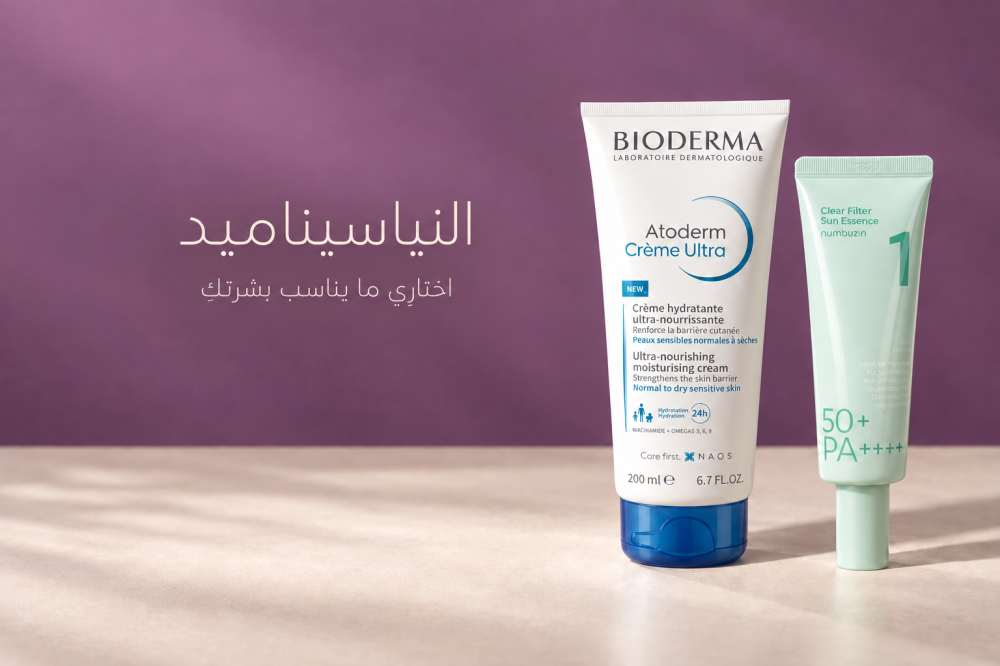
Niacinamide Benefits for Skin and How to Choose the Right Product
You may be looking for an ingredient that helps reduce shine, improve the appearance of uneven skin tone, or support hydration. Niacinamide appears in many skincare products, from serums and moisturizers to sunscreens.
Understanding its benefits is a useful starting point. Choosing the right product also depends on its overall formula, its purpose, and how well your skin tolerates it. This guide explains what you can expect from niacinamide and how to choose products from RUKN OFRA that fit your routine.
What Is Niacinamide?
Niacinamide, also known as nicotinamide, is a form of vitamin B3. It is used in topical skincare products to support the skin barrier and improve the appearance of skin tone and texture.
It is not an exfoliating acid. Its presence in a product does not mean you need to add a separate niacinamide serum to your routine—it may already be in your moisturizer.
What Are the Main Benefits of Niacinamide for Skin?
Supporting the Skin Barrier and Hydration
The skin barrier helps retain moisture and protect against external factors. Niacinamide may support this barrier and help reduce water loss, making it a useful ingredient in some moisturizing formulas.
However, a serum containing niacinamide does not necessarily replace a moisturizer. A product’s moisturizing ability depends on its complete formula.
Helping Reduce Excess Oil and Shine
Clinical trials studied a moisturizer containing 2% niacinamide and found improvements in some measures of skin oil, although results differed between study groups.
Niacinamide may therefore be an option for managing shine, but it does not completely stop oil production or guarantee the same results for every person or product.
Improving the Appearance of Uneven Tone and Texture
A study of a formula containing 5% niacinamide found improvements in some signs of pigmentation, fine lines, and skin texture.
These findings apply to the formula studied. They do not mean that every product containing niacinamide will deliver the same results. Caring for uneven skin tone also requires appropriate sun protection and a consistent routine.
Is Niacinamide Suitable for Your Skin Type?
Niacinamide can be included in routines for different skin types, but choosing the right formula matters more than looking for the ingredient alone:
- Oily and combination skin: Look for a comfortable texture that does not feel heavy. Consider whether you need a moisturizer or a product specifically intended to address shine.
- Dry skin: Prioritize a complete moisturizing formula rather than focusing only on a single-ingredient serum.
- Sensitive skin: Check the full formula and introduce the product gradually. Tolerating niacinamide does not necessarily mean your skin will tolerate fragrances, acids, or other ingredients in the same product.
Niacinamide is generally well tolerated, but some people may still experience discomfort with certain formulas.
Is a Higher Concentration Better?
Not necessarily. Studies using concentrations such as 2% and 5% show that potential benefits do not always require the highest percentage available. However, they do not establish one ideal concentration for everyone.
Choose according to your skin’s needs, the complete formula, and the product’s directions. If the niacinamide percentage is not stated, you cannot accurately determine it from its position in the ingredient list alone.
How Do You Use a Product Containing Niacinamide?
Its place in your routine depends on the type of product:
- Start by cleansing your skin.
- If it is a leave-on serum, follow its directions; it will usually go before moisturizer.
- If it is a moisturizer, use it during the moisturizing step.
- If it is a sunscreen, apply it at the end of your morning skincare routine according to its directions.
Introduce one new product at a time. Test it on a small area, following its instructions, before applying it more widely. You do not need a toner, serum, and cream that all contain niacinamide to build a good routine.
Do not expect immediate changes in skin tone or oiliness. The studies mentioned assessed results over several weeks, and responses vary depending on the product and your skin.
Options from RUKN OFRA Based on Your Needs
Our niacinamide category includes formulas with different purposes. The following examples are options to choose from according to your needs—not steps that must all be used together.
For Daily Moisturizing: BIODERMA Atoderm Crème Ultra
If hydration is your priority, explore BIODERMA Atoderm Crème Ultra Moisturizer, 200 ml.
BIODERMA describes this cream as nourishing daily moisturizing care for normal to dry skin. It is listed in RUKN OFRA’s niacinamide category. Choose it for your moisturizing needs rather than treating it as a concentrated niacinamide serum.
For Morning Sun Protection: numbuzin No.1 Sunscreen
numbuzin No.1 Clear Filter Sun Essence SPF50+ PA++++, 50 ml is included in the category, and its store description lists niacinamide among its ingredients.
Its main role here is sun protection within your morning routine. The presence of niacinamide does not mean that it provides the sunscreen protection—niacinamide itself is not a sunscreen.
For a Radiance-Focused Formula: Arencia Vitamin C Booster Shot
Explore Arencia Vitamin C Booster Shot Cream, 30 ml.
According to the store’s product information, this formula combines vitamin C, niacinamide, and moisturizing ingredients. As a multi-ingredient product, its potential benefits should not be attributed to niacinamide alone. Check the packaging directions and consider how the formula fits your skin, particularly if your routine already includes other active ingredients.
Common Mistakes When Choosing a Product
Buying based only on the percentage: An ingredient’s concentration does not tell you everything about the formula’s quality or suitability for your skin.
Repeating the ingredient in every step: Review your current products before adding another one; they may already contain niacinamide.
Confusing serums, moisturizers, and sunscreens: Sharing an ingredient does not make these products interchangeable.
Continuing despite irritation: Stop using a product if clear irritation develops. If discomfort persists, or you have painful breakouts or an ongoing skin concern, consult a dermatologist.
Frequently Asked Questions About Niacinamide
Do I Need a Niacinamide Serum If It Is Already in My Moisturizer?
Not necessarily. First identify what you want to improve, then review what your current products do before adding another step.
Does Niacinamide Remove Pores?
Do not expect pores to disappear. Some formulas may help improve the appearance of skin and shine, but describing niacinamide as permanently “closing” or removing pores is inaccurate.
Does Niacinamide Treat Acne?
Not every cosmetic product containing niacinamide should be considered an acne treatment. A scientific review found that evidence for its role in treating acne is limited. Persistent acne needs appropriate assessment.
When Will I See Results?
There is no guaranteed timeline for all products. Monitor your skin’s response while using the product consistently according to its directions. Remember that studies assess specific formulas over defined periods.
Choose What Supports Your Skin’s Needs
Start with a clear priority: better hydration, managing shine, or improving the appearance of uneven tone. Then choose a product that serves that purpose and fits your routine.
Explore niacinamide products at RUKN OFRA, and review each option’s formula and directions before choosing.
100% Authenticity Guarantee — Get a full refund if the product is proven to be inauthentic.
